How to Choose the Best Warm Mist Humidifier in 2026?
Choosing a warm mist humidifier in 2026 is less about finding the biggest tank and more about matching the device to your room and routine. A bedroom unit should be quiet, stable, and easy to clean. A larger living space may need greater output, but more mist is not automatically better. An inexpensive hygrometer can help you check actual humidity instead of guessing from dry lips or a fogged window. Too much moisture can encourage dampness and mold, so follow the manufacturer’s guidance and monitor the room.
Indoor-air researcher Dr. William Fisk’s work informs a useful principle for shoppers: “Measure the room; don’t guess.” This is an editorial takeaway, not a direct quotation. Compare models by room coverage, adjustable output, automatic shutoff, tank design, and cleaning access. Warm mist humidifiers heat water, so check where the unit will sit, especially around children and pets. Keep it on a stable surface, away from bedding and reach. Small details matter. A tank that looks simple in a product photo may be awkward to rinse at a sink. Review care instructions before buying, and consider how often you can realistically descale the unit. That part is easy to overlook. This guide weighs comfort against upkeep, operating noise, and practical safety features, while recognizing that no single model suits every home. The best choice is the one you can maintain consistently—and use without turning humidity into another household chore.
Set the Humidity Goal: EPA Recommends 30–50% Indoor Relative Humidity
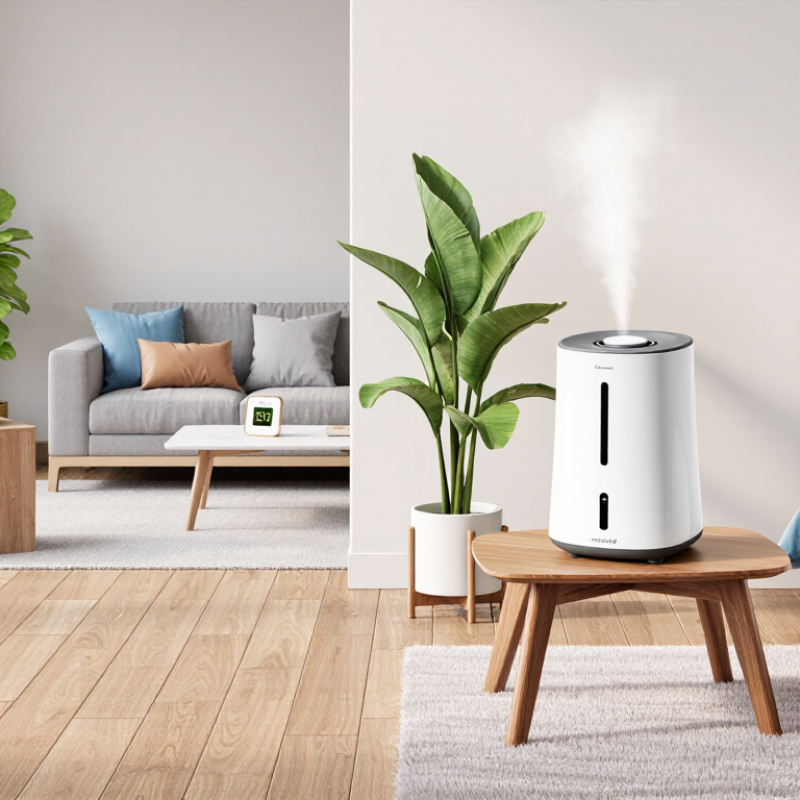
For a warm mist humidifier, set a humidity goal before choosing a model. The U.S. Environmental Protection Agency’s A Brief Guide to Mold, Moisture and Your Home recommends keeping indoor relative humidity between 30% and 50%. Its humidifier guidance gives the same range. Aiming near 40% is a useful starting point, not a rule for every room or season.
Use a small digital hygrometer to check the room, rather than trusting the humidifier’s built-in reading alone. Place it away from the steam outlet, windows, and exterior walls; nearby moisture can distort the reading. Check it at different times of day. Small shifts matter. If the reading stays below 30%, a modest increase may ease dry-feeling air. If it approaches 50%, turn the unit down or off and recheck.
Watch the room, too. Condensation on cold glass, damp window frames, or a musty smell can signal excess moisture, even when the display looks acceptable. Lower the setting and improve ventilation; do not chase a number at the cost of wet surfaces. It is easy to misjudge humidity by feel alone. A scratchy throat is not a hygrometer.
How to Choose the Best Warm Mist Humidifier in 2026?
Set a humidity goal: the U.S. Environmental Protection Agency recommends keeping indoor relative humidity between 30% and 50%.
The highlighted bar marks the recommended range—not a required setting for every home. Use a hygrometer to monitor indoor humidity, and adjust your humidifier to keep readings within this range.
Match Humidifier Output to Room Size and Daily Moisture Capacity
A humidifier’s room-size rating is a starting point, not a guarantee. Measure the room, then consider ceiling height, drafty windows, and how often the door stays open. A compact bedroom with a closed door may need less output than an equally sized room connected to a hallway. Check the unit’s rated coverage and moisture output, usually listed as gallons or liters per day. Bigger is not always better. An oversized unit can leave windows damp, especially in a small, cool room.
Daily capacity matters when you want steady moisture without constant refilling. Compare the tank size with the stated output, but remember that actual use changes with room conditions and settings. A hygrometer helps show whether the room is getting too humid; many health sources recommend keeping indoor humidity below 60 percent. Aim for a comfortable level, then adjust gradually. Watch the corners. Condensation on glass or a musty smell can signal excess moisture, even when the humidifier’s display looks normal. One detail is easy to miss: warm mist can pose a burn risk if a child or pet can reach the unit. Choose placement carefully, and check how often the manufacturer recommends cleaning it. Room ratings can be optimistic. Use them as a guide, then let measured humidity and everyday refills inform your choice.
Compare Warm-Mist Models by Tank Size, Controls, and Auto Shutoff
Choosing a warm-mist humidifier starts with matching tank capacity to room size and your refill routine. AHAM’s humidifier-sizing guidance emphasizes matching output to the space; a large tank alone does not guarantee longer useful runtime. Check the stated moisture output, then compare it with capacity. For example, a one-gallon tank dispensing a quarter-gallon per hour would run about four hours. Actual runtime varies. A larger tank helps.
Controls matter on cold, dry nights. Look for adjustable output and a humidistat, then use a separate hygrometer to check the room rather than trusting a dial alone. The U.S. Environmental Protection Agency advises keeping indoor humidity ideally between 30% and 50%. Set the target cautiously; condensation on a window is a useful warning. Still, check the controls.
Auto shutoff is essential when the tank empties, especially if the unit runs overnight. Confirm the feature is clearly specified, not merely implied by a “sleep” setting. Also consider how easily the tank opens for cleaning. EPA guidance recommends cleaning portable humidifiers every third day. Warm mist can leave mineral residue, so a narrow opening may make upkeep frustrating. I would choose a slightly smaller tank that is easy to rinse over a larger, awkward one.
Estimate Energy Use from Rated Watts and Hours of Daily Operation
How to Choose the Best Warm Mist Humidifier in 2026?
Estimate Energy Use from Rated Watts and Hours of Daily Operation
Start with the humidifier’s rated wattage, usually printed on its label or in the manual. Multiply watts by daily operating hours, then divide by 1,000 to estimate kilowatt-hours. For example, an 800-watt unit running six hours uses about 4.8 kWh daily. Over 30 days, that is roughly 144 kWh. It is a useful estimate, not a precise meter reading.
To estimate cost, multiply those kilowatt-hours by your electricity rate. At 20 cents per kWh, the example costs about 96 cents daily, or $28.80 over 30 days. Actual use may be lower if the heater cycles on and off, or higher if you run it longer. Room temperature and settings can affect runtime, too. Check the product manual for rated input; wattage alone does not show exactly how much electricity it will use in your room.
Tips: Compare the same daily hours across models, and use your own electricity rate. Keep a simple note of operating time for a week, then compare it with the estimate. The gap can be surprising. Don’t treat the calculation as exact.
Check Cleaning and Scald Risks: EPA Advises Cleaning Every Third Day
When choosing a warm mist humidifier, check whether its tank and heating chamber are easy to reach and scrub. The U.S. Environmental Protection Agency’s Use and Care of Home Humidifiers guidance advises cleaning portable units every third day. That interval matters: mineral film can collect around the heater, while a narrow tank neck makes thorough cleaning harder. Look for removable parts and clear cleaning instructions. A small brush beside the sink helps. It is easy to postpone cleaning; that is the weak point in an otherwise simple routine.
Scald risk deserves equal attention. The U.S. Consumer Product Safety Commission warns that hot water and steam from warm mist units can burn, so place the appliance on a stable, level surface away from children and pets. Check for a cool-touch exterior, secure tank fit, and automatic shutoff if the water runs low. EPA guidance also recommends keeping indoor humidity between 30% and 50%; a simple hygrometer can help prevent damp window frames and condensation. If cleaning feels awkward during the first setup, it may be awkward every third day, too.
How to Choose the Best Warm Mist Humidifier in 2026? — Check Cleaning and Scald Risks: EPA Advises Cleaning Every Third Day
| What to Check |
Why It Matters |
Practical Buying or Use Check |
| Cleaning frequency |
Mineral deposits and standing water can build up inside portable humidifiers. |
Choose a model that is easy to take apart and clean. The U.S. Environmental Protection Agency (EPA) advises cleaning portable humidifiers every third day. |
| Scald protection |
Warm mist appliances heat water, and hot water or steam can cause burns. |
Look for a stable design, a secure tank, and an automatic shutoff. Keep the unit and its cord out of reach of children, and place it where it cannot be knocked over. |
| Humidity control |
Excess indoor moisture can encourage mold growth and condensation. |
Consider a built-in humidistat or use a separate hygrometer. EPA guidance recommends keeping indoor relative humidity below 60%; a common practical range is 30%–50%. |
| Tank access and parts |
Narrow openings and hard-to-remove components make routine cleaning more difficult. |
Check that the tank opening, heating area, and other water-contact surfaces can be reached and cleaned according to the instruction manual. |
| Water and mineral scale |
Minerals in tap water can leave deposits inside a humidifier. |
Follow the manufacturer’s water guidance. EPA recommends using water with low mineral content, such as distilled water, for portable humidifiers. |
| Automatic shutoff |
A unit that stops when its water supply is depleted can reduce the chance of continued operation with an empty tank. |
Verify that the product specifications describe an empty-tank shutoff, and follow the manual for safe refilling and operation. |
| Room size and runtime |
A unit that is too small may not meet the room’s needs; a large tank can mean fewer refills but still requires regular cleaning. |
Compare the stated room coverage and runtime with the intended room and use pattern. Treat runtime as a convenience, not a reason to skip cleaning. |
| Condensation and dampness |
Wet windows, walls, or nearby surfaces can signal that humidity is too high. |
Reduce the output or switch the unit off if condensation or dampness appears. Keep the humidifier on a level, water-resistant surface away from walls and fabrics. |
| Cleaning instructions |
Warm mist does not remove the need to clean the tank and other water-contact surfaces. |
Check that the manual gives clear cleaning and descaling steps. Unplug the appliance and let hot parts cool before cleaning; never mix cleaning chemicals. |
Safety note: Always follow the humidifier’s instruction manual. Use extra caution around children because warm mist units contain heated water and may expose users to burn hazards.