What Is Lash Furniture?
Lash Furniture is the practical setup behind a lash service: the bed, artist stool, lighting, and storage that shape each appointment. A client may notice the soft cushion first. The artist notices whether the stool rolls smoothly, the lamp reaches the lash line, and supplies stay within arm’s reach. Small details matter. A stable bed supports steady positioning; adjustable height can help artists work without repeatedly leaning over clients. The right setup is not simply attractive. It needs to suit the room, service, and people using it.
Workplace comfort deserves careful attention. The U.S. Bureau of Labor Statistics reported 2.6 million nonfatal workplace injury and illness cases in private industry for 2023. That figure covers many occupations, not lash professionals specifically, so it cannot prove that a certain chair or bed prevents injury. It does, however, make ergonomics a sensible part of the conversation. Furniture designer Charles Eames captured the value of close attention to design: “The details are not the details. They make the design.” He was not a lash-industry specialist, so his words are a design principle, not lash-specific advice.
This guide explains what Lash Furniture includes, how key pieces differ, and what to consider before buying. It also separates useful features from marketing claims. There is no single setup for every studio. A compact room may need a folding bed and mobile cart; a busy studio may value durable upholstery and adjustable equipment. And one point is easy to overlook: attractive furniture can still feel awkward after a full day of appointments.
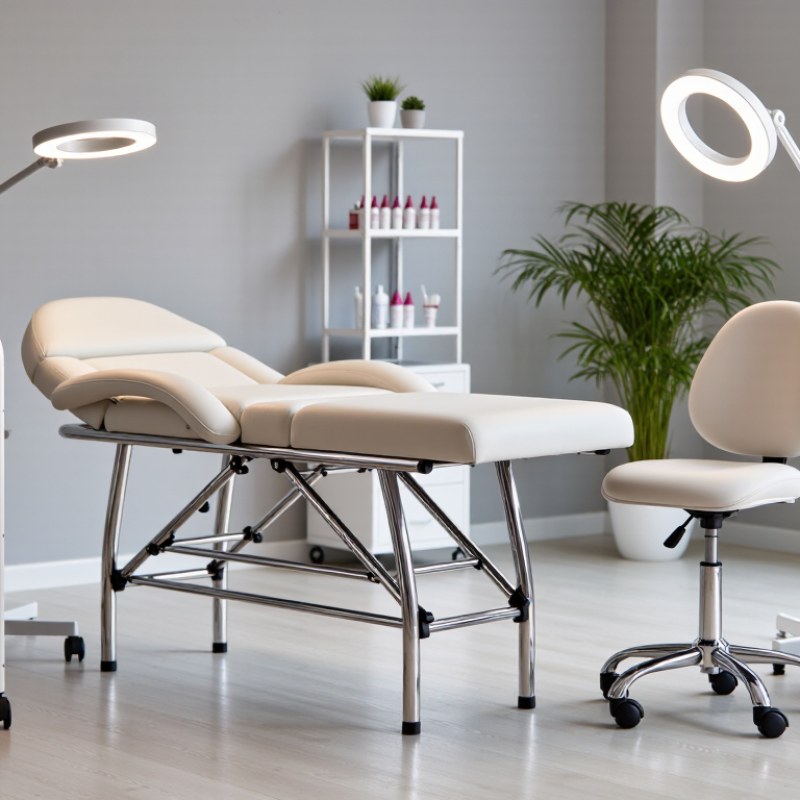
Definition and Role of Lash Furniture in Eyelash Services
Lash furniture is the purpose-built seating, support, and storage used during eyelash services. It commonly includes an adjustable treatment bed, technician stool, rolling trolley, and nearby client chair. The bed keeps the client reclined while the lash artist works close to the eye area. Small details matter.
Height adjustment, stable legs, and wipeable upholstery can support controlled positioning and routine cleaning. A trolley keeps adhesive, tweezers, pads, and trays within reach, reducing repeated turns during a set. An adjustable stool helps the technician view the lashes without leaning continuously. Still, furniture cannot correct poor posture or rushed technique.
Grand View Research valued the global eyelash extensions market at USD 1.62 billion in 2023. Its report projected 6.2% compound annual growth from 2024 to 2030 (Grand View Research, 2024). This figure describes extensions, not furniture sales. It signals a growing service sector, but cannot prove which bed design works best. Studios need to compare client comfort, technician reach, cleanability, and durability during real appointments.
Essential Furniture Used in a Lash Studio
Lash furniture is the equipment that supports both the client’s comfort and the technician’s working posture. The lash bed or treatment chair is the studio’s main piece. Look for stable support, an easy-to-clean surface, and adjustments that suit different client heights. A padded headrest helps keep the client still without forcing the neck forward. Small details matter.
A height-adjustable stool lets the technician sit close to the client while keeping shoulders relaxed. A rolling trolley keeps tweezers, pads, and other daily tools within reach, reducing repeated bending and stretching. Choose one with smooth drawers and surfaces that can be cleaned according to their care instructions. Keep it steady.
Good lighting is essential furniture-adjacent equipment in a lash studio. A movable task lamp can direct light toward the eye area while limiting glare. A mirror, compact storage cabinet, and a comfortable waiting chair can make the room more practical without crowding the treatment space. Leave clear paths around the bed and trolley. A layout may look neat before appointments but feel cramped during a long service; test the setup from the seated position and adjust what repeatedly gets in the way.
Essential Furniture Used in a Lash Studio
Typical width ranges for key studio furniture (cm). These are practical planning estimates; dimensions vary by design and manufacturer.
Use these approximate widths to plan furniture placement and allow comfortable access around the lash bed and work trolley.
How Lash Furniture Supports Comfort and Precision
Lash furniture includes treatment beds, technician stools, storage carts, and task lighting. Each piece can affect how comfortably a technician works and how steadily they perform detailed tasks. An adjustable bed helps keep the client at a workable height, reducing the need to lean forward for long periods. Small details matter. A supportive stool, with a stable base and adjustable height, can help the technician maintain a balanced posture. Comfort is not a luxury during lengthy appointments; fatigue may make precise hand movements harder.
Good organization also supports accuracy. A cart with shallow, easy-to-clean compartments keeps commonly used tools within reach, while a focused lamp helps illuminate the lash line without forcing awkward head positions. Keep the work surface uncluttered. Furniture should feel stable when adjusted, and materials should tolerate routine cleaning according to their care instructions. These choices can make setup more consistent, though furniture alone cannot replace training, good lighting, or careful technique. A perfect setup is rare; room dimensions, client needs, and personal posture all differ. It is worth checking whether the bed height and stool position still feel comfortable after a full appointment, not just during a quick test.
What Is Lash Furniture? - How Lash Furniture Supports Comfort and Precision | Furniture item | Typical features or planning range | How it supports comfort | How it supports precision |
| Lash bed or treatment table | A stable, padded surface; adjustable backrest on many models. Choose a height that suits the technician and allows the client to lie comfortably. | Even padding and supportive positioning can help clients remain still during a long appointment. | A steady surface reduces unwanted movement while the technician works close to the eye area. |
| Technician stool | Height-adjustable seating with a stable base; a backrest or saddle-style seat may suit different working preferences. | Adjusting seat height helps the technician maintain a more comfortable working posture. | A stable seat makes it easier to maintain a controlled position and consistent hand placement. |
| Headrest or neck support | A cushioned support designed to keep the head comfortably positioned; fit and firmness vary by design. | Suitable support can reduce pressure and help the client relax without straining the neck. | A well-positioned head helps keep the eye area accessible throughout the service. |
| Rolling trolley or storage cart | A compact cart with shelves or drawers, preferably with lockable wheels for stationary use. | Keeping frequently used supplies nearby can reduce unnecessary reaching and interruptions. | Organized tools are easier to locate, helping maintain a clear and orderly work area. |
| Task light | An adjustable light positioned to illuminate the treatment area; brightness and color settings vary by model. | Adjustable positioning can help direct light without requiring the technician to lean toward the client. | Clear, well-directed illumination makes it easier to see fine details around the lashes. |
| Work surface or tray | A cleanable, stable surface sized for the tools and supplies used during the service. | A nearby surface can keep essential items within reach and limit awkward movements. | A tidy layout helps separate tools and supplies, making the workflow easier to manage. |
Note: Lash furniture refers to the furnishings and work-area equipment used for lash services. Features and measurements vary by product; choose items that fit the room, the technician, and the client.
Common Materials and Design Features
Lash furniture is the practical setup used for eyelash-extension services: usually a reclining treatment bed or chair, an adjustable stool, storage, and task lighting. The client lies still for long periods, so a padded surface, stable base, and easy-to-adjust backrest matter more than decorative detail. For technicians, a rolling stool and a trolley within arm’s reach can reduce repeated bending. Small details matter. A bright, adjustable lamp helps illuminate fine lashes, but its position should avoid glare for both people.
Common materials include metal frames, plywood or solid wood, high-density foam, and vinyl or polyurethane upholstery. Metal can provide a firm base; wood adds a warmer look but may need careful protection from spills. Smooth upholstery is easier to wipe between appointments, though seams and creases can collect residue. Wipe-clean is not wear-proof. Check stitching, weight limits, and replacement-part availability before buying. The 2024 Grand View Research furniture-market report estimated the global market at USD 541.52 billion in 2023; that broad figure describes furniture overall, not lash-specific equipment. It does, however, underline how varied furniture construction can be. Materials alone do not guarantee comfort. A bed that looks plush may still feel hard after an hour, so assess cushioning and working height in person when possible.
Choosing and Maintaining Lash Furniture
Lash furniture is the working setup around a lash service: the treatment bed, technician’s stool, trolley, and task lighting. Each item affects reach, posture, and how smoothly tools stay within easy access. A stable bed with adjustable height helps different technicians work without leaning over clients. A supportive stool matters, too. Small details count.
When choosing furniture, test it as you would use it: sit beside the bed, reach for tweezers, and check whether the trolley blocks your knees. Look for smooth, cleanable surfaces and upholstery compatible with the disinfectants you use. NIOSH ergonomic guidance recommends arranging work to support neutral body positions and reduce awkward reaching. The U.S. Bureau of Labor Statistics recorded 2.6 million nonfatal workplace injuries and illnesses in private industry in 2023; this broad figure is not specific to lash studios, but it reinforces the value of safer work design.
Maintenance is practical, not glamorous. Remove adhesive residue promptly, clean contact surfaces between clients, and follow product and furniture care instructions. Check bed locks, stool wheels, seams, and cable placement regularly. A wobble is a warning. I would not assume a setup remains comfortable just because it felt right on day one; different services and body heights can expose weak spots. Keep a short weekly checklist, then adjust what causes repeated reaching or pressure.