What Are the Top PVC Cabinet Types in 2026?
Pvc Cabinets are gaining attention as homeowners seek cabinetry that handles moisture, cleans easily, and fits tighter renovation budgets. Yet “PVC cabinet” can describe very different products: rigid PVC foam-board cabinets, PVC-laminated or membrane-wrapped doors, and modular units assembled with PVC components. Their performance depends on more than the label. Board thickness, edge sealing, hardware, and installation all matter.
Industry reports offer useful context, but not a definitive ranking of PVC styles. Grand View Research’s Kitchen Cabinets Market report examines the broader cabinet sector, while the Freedonia Group’s U.S. Kitchen Cabinets analysis tracks product and material demand. These sources help explain why durability, price, and design choices shape purchasing decisions. They do not establish which PVC cabinet type will lead in 2026. That distinction matters.
This guide compares the main types by construction, appearance, maintenance, and likely use in kitchens, bathrooms, and utility rooms. A glossy membrane door may suit a compact, bright kitchen; a foam-board cabinet can be practical near a damp sink. But neither choice is automatically superior. Check the product specification, especially the substrate and edge finish. Small details matter. A neat showroom sample can hide weak joints, and that is easy to overlook. The best option is the one suited to the room, the installer, and the household’s daily use—not simply the trendiest finish.
What PVC Cabinets Are and How They Are Made
PVC cabinets are storage units made with polyvinyl chloride (PVC) panels or boards, rather than solid timber alone. In many kitchens, “PVC cabinet” describes a construction method, not one uniform material. Some units use rigid PVC foam board throughout; others apply a PVC film over MDF or another core. That distinction matters. A smooth, sealed surface can resist splashes and wipe clean with a damp cloth, but coated board is not the same as solid PVC. Check exposed edges, hinge mounts, and panel thickness. Small details tell more than a glossy door.
Manufacturing usually begins with sheets cut to cabinet dimensions, often by a CNC router for consistent parts. Edges are sealed, joined, or finished with matching PVC tape, depending on the board and factory process. The cabinet body is assembled with screws, connectors, or compatible adhesives; doors receive hinges and handles. Some PVC panels are heat-formed or laminated to create a raised profile. Keep heat in mind. Near ovens or strong sunlight, lower-grade panels may soften, fade, or loosen at joints. Ask how the board is constructed and how hardware is fixed. I would not judge quality by color alone.
How PVC Cabinet Types Are Classified
What Are the Top PVC Cabinet Types in 2026?
How PVC Cabinet Types Are Classified
PVC cabinets are easiest to compare by core, construction, and surface finish. The core may be solid PVC foam board or a wood-based panel covered with PVC film. Solid-board units resist moisture well, while film-wrapped panels offer more design choices. They are not the same product. Look at a door edge: a visible wood-based core often signals a wrapped panel, not solid PVC.
Construction describes how the cabinet is assembled. Common options include modular units, made in standard widths, and custom units, built to fit specific dimensions. Surface categories include plain, embossed, and printed finishes. Grand View Research estimated the global PVC market at USD 60.13 billion in 2023 and projected 3.9% annual growth from 2024 to 2030. That figure covers PVC broadly, not cabinets alone, so it should not be read as a cabinet-sales forecast. Finish quality and edge sealing still vary.
Tips: Check hinges, seams, and the underside of a shelf before choosing. Ask for a sample and wipe it with a damp cloth. Small test. Also confirm the board thickness and care instructions; “water-resistant” does not mean every joint is waterproof.
The Main PVC Cabinet Types Available in 2026
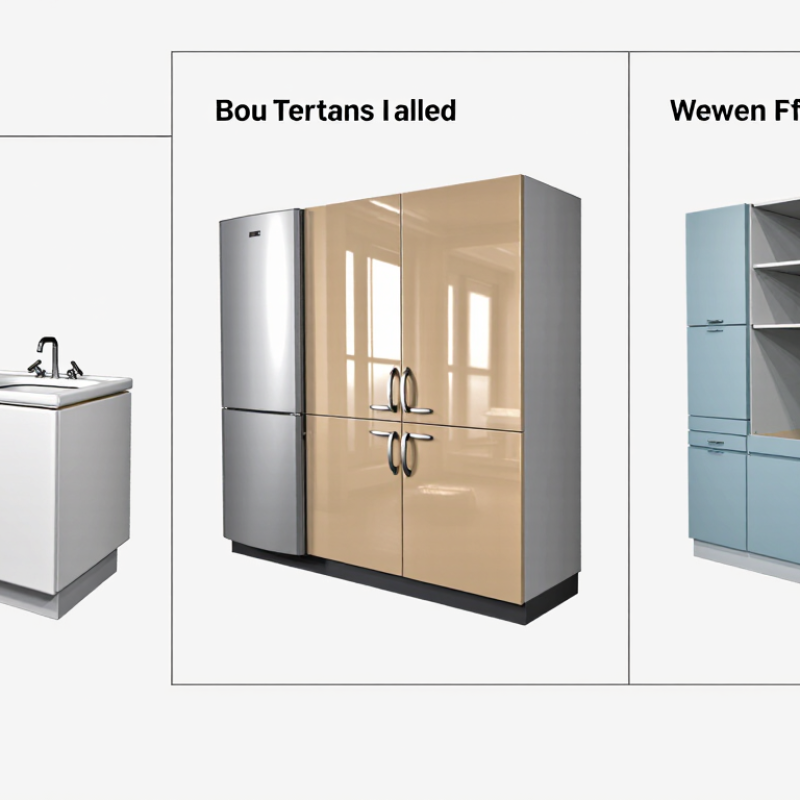
PVC cabinets are not one construction type. The term can describe solid PVC foam-board carcasses, hollow PVC panels, or wood-based boards faced with PVC film. These options differ in rigidity, weight, edge finish, and repairability. Solid foam board handles damp rooms well, but thin panels may flex under heavy cookware. Check shelf spans and panel thickness, not just the surface.
PVC-laminated MDF or particleboard offers a smoother, more furniture-like finish. Its core still matters: exposed cut edges can swell if moisture reaches them. Membrane-wrapped doors provide shaped profiles and easy cleaning, though heat near ovens can stress the film or adhesive. Modular PVC units are another category; they simplify sizing, but fixed dimensions may leave awkward gaps. The terminology is messy.
Demand for cabinet upgrades is broad, not specific to PVC. Houzz’s 2024 U.S. Kitchen Trends Study reported that 76% of renovating homeowners upgraded their cabinets. That figure signals strong renovation activity, but it does not show which cabinet material they chose. Before specifying a PVC type, inspect a sample’s corners, hinge mounting, and finish under side lighting. Small flaws show up there. A water-resistant panel is not automatically a water-resistant cabinet; joints, hardware, and installation still matter.
How PVC Cabinet Types Differ in Durability and Appearance
PVC cabinet types differ most in their core and surface finish. Solid PVC board resists moisture well and suits laundry rooms or sink bases, but can feel less warm than wood. Foam PVC is lighter and easy to shape; its softer surface may dent under hard impacts. PVC-wrapped MDF offers smooth, seamless doors in matte or gloss finishes. Yet heat or a damaged edge can weaken the bond. Check the edges.
PlasticsEurope’s Plastics – the Fast Facts 2023 reports that PVC accounted for about 12.4% of global plastics production in 2022. That scale shows the material is widely used, not that every cabinet has the same lifespan.
Durability depends on board density, edge sealing, hardware, and installation. A glossy film can look crisp under showroom lights, while fingerprints and scratches may show more clearly at home. Matte finishes hide some marks, though they can be harder to clean. I would not judge a cabinet by its surface alone. Ask how its panel and edges handle moisture, heat, and daily cleaning; product-specific test results matter more than broad material claims.
How to Choose a PVC Cabinet Type for Your Space
Choosing a PVC cabinet type starts with the room, not the finish. For humid bathrooms or laundry areas, solid PVC or PVC foam-board cabinets resist moisture better than ordinary wood-based panels. Check the joints, back panel, and edge sealing; water often enters there first. Hollow PVC boards are lighter and can suit wall-mounted storage, but they may feel less rigid under heavy loads. For kitchens, compare the cabinet’s stated load capacity and keep hot appliances away from PVC surfaces. PVC is practical, not indestructible.
Layout & planning Next, match the cabinet layout to the space. A narrow bathroom may need a shallow vanity with drawers, while a kitchen benefits from deep base cabinets and full-height pantry storage. The National Kitchen & Bath Association recommends a 42-inch work aisle for one cook and 48 inches for multiple cooks. Measure doors, drawers, and appliance clearances before ordering. Houzz’s 2024 U.S. Houzz & Home Study reported that 54% of homeowners renovated in 2023, a reminder that renovation choices compete for real budgets. Compare total installed cost, not just panel price.
Finish & quality checks Look closely at samples under your room’s lighting. Glossy white can make a small room feel brighter, yet it shows fingerprints. Matte finishes hide smudges better, though scratches may stand out. One caveat: PVC quality varies, and a low-cost board can sag if poorly supported. Ask for panel thickness, hardware details, and care instructions in writing. A sample helps, but it cannot reveal every weakness.