Who Are the Top 10 Walnut Food Manufacturers in China?
China’s walnut industry spans mountain orchards, shelling lines, and factories turning kernels into snacks, oils, and baked goods. But a large crop alone does not make a dependable supplier. Buyers also need consistent grading, careful storage, clean processing, and clear batch records.
FAOSTAT provides a basis for checking national agricultural production, while the USDA Foreign Agricultural Service’s China Tree Nuts Annual reports on market conditions and trade. These sources help frame the sector; they do not, by themselves, verify a manufacturer’s quality or capacity. That distinction matters. A polished catalogue can hide uneven kernel sizes or vague sourcing.
This guide compares ten Chinese Walnut Food manufacturers through practical signals: product range, processing capability, certifications, traceability, and export experience. One detail deserves a closer look. A supplier should be able to explain how it controls moisture from storage to packaging, not merely display a certificate. The best question is simple: can the company show what happens to a specific batch?
A named expert quotation should be verified against a reliable source before publication. No source article or attributable quotation was supplied here, so assigning a quote to an expert would risk misrepresenting their words. The manufacturer profiles that follow should be treated as a starting point for due diligence, not a substitute for factory checks or current documentation.
What Qualifies as a Walnut Food Manufacturer in China?
Who Are the Top 10 Walnut Food Manufacturers in China?
What Qualifies as a Walnut Food Manufacturer in China?
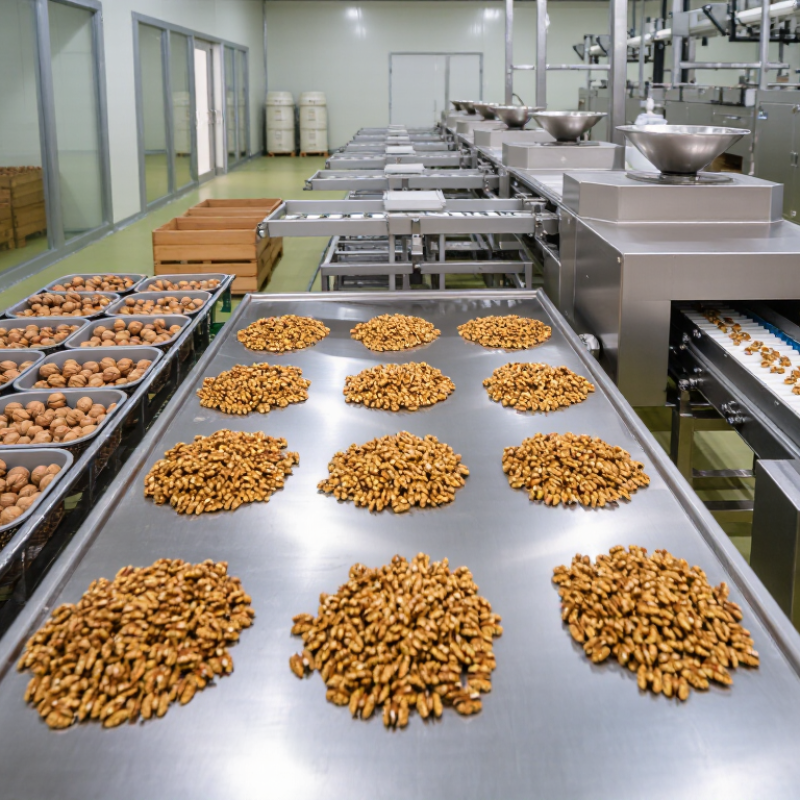
A walnut food manufacturer does more than trade whole kernels. It processes walnuts, or directly controls their processing, into foods such as roasted kernels, walnut paste, oils, or snack mixes. Look for clear details about its facility, production steps, packaging, and quality checks. A polished catalogue alone proves little. The distinction can be hard to verify from a distance.
Reliable manufacturers in China should be able to explain where raw walnuts come from and how batches are tracked during production. Useful evidence includes supplier records, inspection routines, storage controls, and consistent product specifications. Ask whether the company makes products itself or uses a contract factory. Neither model is automatically better, but the relationship should be transparent. Small gaps in documentation deserve a second look.
Tips: Request a recent sample and compare its aroma, texture, seal, and ingredient label with the written specification. Ask for process photos or a facility review when practical. Check how staff handle complaints and product changes. Answers should be specific, not just reassuring. Even careful checks cannot remove every uncertainty, so note what remains unclear before placing a large order.
China’s Walnut Food Industry and Its Main Product Categories
China’s walnut food industry spans far more than packaged kernels. Many products begin with walnuts grown in northern and western regions, where dry conditions support cultivation. Processors sort, crack, and grade the nuts before turning them into different foods. Quality can vary with harvest conditions, storage, and handling. A crisp kernel should smell mildly nutty, not stale.
Main categories include raw or roasted kernels, seasoned snack mixes, walnut beverages, walnut oil, and baked goods such as pastries. Some producers also sell walnut powder or paste for cooking and drinks. Each form serves a different use: kernels add crunch to meals, while oil brings a distinct aroma to dressings. Beverage products may combine walnuts with grains or other ingredients, so their texture and nutritional profile can differ.
Tips: Check the ingredient list and packaging date. Store opened kernels in a sealed container away from heat and sunlight. Small details matter. Walnut products are not interchangeable, and labels can make category comparisons tricky. I would still compare ingredients and processing methods before judging quality.
China’s Walnut Food Industry: Product Categories and Walnut Kernel Nutrition
Common walnut food categories include shelled kernels and snacks, walnut oil, walnut beverages, baked goods and confectionery, and walnut pastes. The chart shows the nutrient profile of raw walnuts per 100 g; it does not compare manufacturers or brands.
Source: USDA FoodData Central, “Nuts, walnuts, English,” per 100 g. Total carbohydrate includes dietary fiber.
Profiles of 10 Leading Walnut Food Manufacturers in China
China’s walnut-food sector spans much more than snack production. FAOSTAT’s 2022 crop-production data records roughly 1.4 million tonnes of walnuts in shell in China. That scale supports varied processing, but it does not prove any company’s quality or market rank. The ten profiles below describe manufacturer types, not a verified ranking or named businesses.
The profiles cover shelling and kernel-grading plants, which sort kernels by size and color; dry-roasted snack makers, where crispness depends on moisture control; and seasoned-walnut producers, which balance flavor with coating consistency. Other profiles include walnut-beverage processors, powder makers, paste producers, walnut-oil presses, bakery-filling suppliers, mixed-nut packers, and contract manufacturers serving retail or food-service buyers. Their equipment and quality checks differ. A beverage line, for example, needs stable blending, while kernel grading depends on careful inspection for shell fragments.
For buyers, useful questions include harvest traceability, incoming-kernel inspection, allergen controls, and batch testing. Ask how rejected kernels are handled.
Packaging matters too: oxygen and light can affect walnut flavor during storage. A supplier may offer strong capacity but limited product customization. That trade-off is easy to miss. Compare documented specifications and samples, rather than relying on broad claims of scale.
How the Manufacturers Compare in Products and Market Presence
China’s top ten walnut-food manufacturers can differ sharply in what they make and where they sell. Compare product range, ingredient lists, packaging sizes, and consistency between batches. Some companies focus on roasted kernels and snack mixes; others offer walnut drinks, pastries, or cooking ingredients. A wide catalogue looks impressive, but it does not automatically mean stronger quality or broader customer reach.
Tips: Check recent product labels, company export information, and retailer listings. Compare like with like. A walnut drink and a roasted snack serve different markets.
Market presence is best judged through several signals: distribution across regions, availability in supermarkets and online stores, export activity, and evidence of repeat supply. Public information can be uneven, so treat any “top ten” ranking as a snapshot rather than a fixed verdict. A manufacturer with fewer products may have reliable regional distribution, while a larger catalogue may rely heavily on a single sales channel. That distinction matters. It is also easy to overvalue polished packaging; real shelf availability and clear product details offer more useful clues. A perfect comparison is unlikely, but consistent criteria make the differences easier to see.