



Vicks products are available for purchase online and in-store at most major retailers.
VICKS SUPPORT
View product-specific FAQs & videos
Choosing the right Singing Bowl can feel surprisingly personal. Each bowl produces a different tone, vibration, and emotional response. A bowl that sounds beautiful in a video may feel harsh in your room. That is easy to overlook.
Peter Hess, founder of the Peter Hess Institute, has often emphasized, “The sound should touch the soul.” This idea offers a useful starting point. A quality Singing Bowl is not judged by appearance alone. Its resonance, stability, craftsmanship, and practical purpose matter equally. Your hands and ears must participate.
This guide explores seven practical tips for choosing the best Singing Bowl. It considers your intended use, bowl size, sound quality, materials, manufacturing details, playing technique, and seller reliability. You will also learn how to test a bowl without rushing the decision. Listen for a clear fundamental tone. Notice how long the vibration continues. Feel whether the sound remains comfortable near your body.
Some choices are imperfect. A heavier bowl is not automatically better. An antique finish may look attractive but reveal little about performance. Even experienced buyers can misjudge a bowl after a short demonstration. Take time. Compare several options in the same space, if possible. The best Singing Bowl should support your practice, not dominate it.
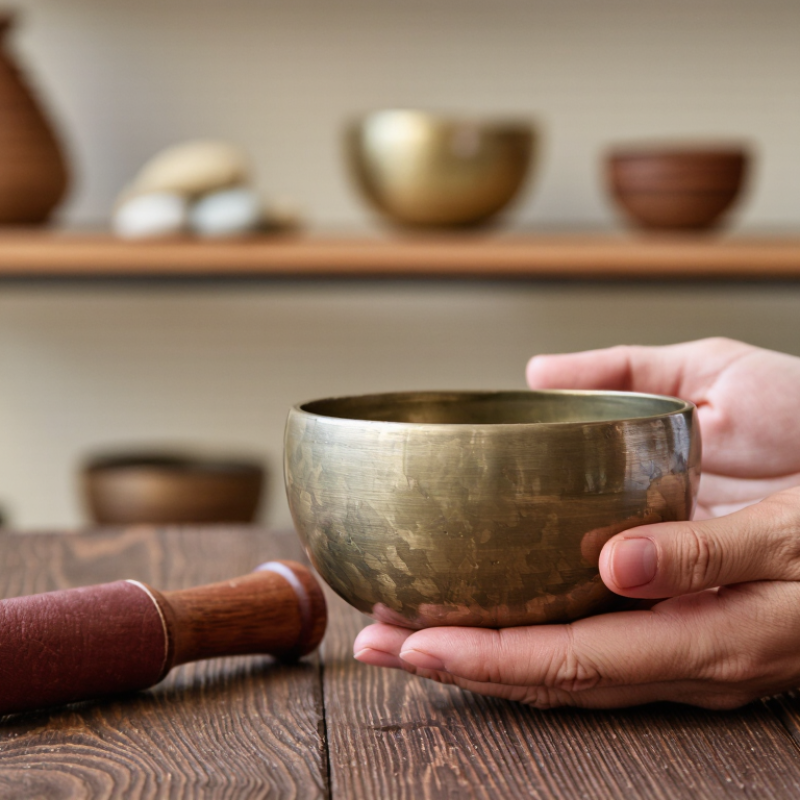
Singing bowls differ in material, shape, thickness, and sound behavior. Traditional metal bowls often produce layered tones, including a clear fundamental note and softer overtones. Hand-hammered surfaces may create subtle variations between bowls. Crystal bowls usually offer a cleaner, brighter tone with longer sustain. Neither type is automatically better. The right choice depends on your listening purpose, room, and comfort.
Tip 1: Strike each bowl gently and listen from several distances.
Tip 2: Notice whether the sound feels warm, bright, deep, or sharp.
Tip 3: Check the decay. A long ring may suit meditation, while a shorter response can work better in small rooms.
Tip 4: Do not choose by note name alone. Musical tuning is not always standardized across makers.
Size also changes the experience. Larger bowls often create deeper vibrations, while smaller bowls can sound focused and agile. A bowl should feel stable in your hand and comfortable to play.
Tip 5: Test the rim with a soft mallet and keep your pressure even.
Tip 6: Look for clean edges, balanced weight, and no visible cracks.
Tip 7: Compare at least three bowls before deciding.
I once preferred a beautiful, deep bowl, but its intense resonance quickly felt tiring. That changed my view. Sound quality is personal, and first impressions can mislead.
A singing bowl should fit your hands, room, and intended practice. Size changes resonance: smaller bowls often produce brighter, higher tones, while larger bowls usually create deeper, slower vibrations. Weight matters too. A heavier bowl can feel more stable, but it may be tiring to hold. There is no universal “perfect” measurement. My early mistake was judging quality by size alone.
Tips 1–3: Measure the rim and base before buying. Check whether the bowl sits securely on your palm or cushion. Tap it gently, then listen for a clear fundamental tone and balanced overtones. Avoid harsh ringing or a note that fades immediately. Use a tuner only as a reference; perceived warmth cannot be reduced to pitch.
Tips 4–7: Compare bowls in a quiet room. Test both striking and circling techniques. A long sustain suits meditation, while a shorter decay may work better in group sessions. Record the sound from several feet away, because close listening can mislead you. Keep volume comfortable: the NIOSH Criteria for a Recommended Standard: Occupational Noise Exposure recommends limiting exposure around 85 dBA over eight hours, using a 3 dB exchange rate. ISO 532-1:2017 also shows why loudness should be assessed perceptually, not by frequency alone. Industry data does not define one ideal bowl. Your room, touch, and hearing still matter.
Choosing a singing bowl begins with its material, not its appearance. Bronze often produces a layered, lingering tone, while brass can sound brighter and more direct. Ask for the alloy details. Golden color alone proves little. Hold the bowl near a window and inspect the rim, inner surface, and base. Uneven grinding, sharp edges, or visible cracks suggest weak finishing.
Craftsmanship becomes clearer during testing. Strike the rim gently, then circle it with a wooden mallet. Listen for a stable note, clean sustain, and minimal buzzing. Feel the vibration through your fingertips. A well-balanced bowl should not wobble on a flat surface. Handmade marks may show skilled work, but irregularity is not automatically quality. I still check several bowls from one batch, because one excellent sample can hide inconsistent production.
Manufacturing evidence adds reliability. Ask whether the maker records alloy batches, dimensional checks, and final acoustic inspections. The ISO Survey 2023 reported 1,265,216 ISO 9001 certificates worldwide, but certification does not guarantee that every bowl is flawless. It only indicates a documented quality-management system. The Global Wellness Institute’s 2024 Global Wellness Economy Monitor valued the sector at $6.3 trillion in 2023, increasing pressure for credible wellness products. Treat marketing claims carefully. Request measurable details, such as weight, diameter, wall thickness, and return conditions. Sound is personal. Quality control should not be.
A practical 100-point evaluation framework covering material, craftsmanship, sound, and manufacturing quality. The percentages represent suggested decision weights rather than data from any company or brand.
Choosing the best singing bowl starts with your intended use, not its appearance. For meditation, a clear, sustained tone may help create a steady listening focus. For yoga sessions or group sound work, choose a louder bowl with a longer resonance. A smaller bowl suits travel, quiet rooms, or personal practice. Test it in the space where you will use it. A bowl that sounds gentle in a shop may feel too sharp in a small bedroom.
Consider seven practical details: tone, size, weight, material, resonance, playing method, and comfort. Listen for a stable note without rattling or harsh overtones. Check whether the rim feels smooth and balanced in your hand. If you use a mallet, confirm that its grip feels secure. Some bowls respond best to gentle striking, while others need slow, even rubbing around the rim. Your technique changes the sound more than many beginners expect. Small differences matter.
Personal preference still leads the decision. You may prefer a deep tone for quiet breathing or a brighter tone for opening a class. I once selected a large bowl because it sounded impressive, but it overwhelmed my narrow practice room. That choice was not wise. Notice how your body reacts, while avoiding claims that a particular frequency can treat illness. Ask an experienced seller about construction and listen for consistent answers. Record short test sounds if possible. Then compare them later, when excitement has faded.
| Tip | Key Dimension or Feature | Useful Options | Best Match for | Why It Matters | Simple Selection Check |
|---|---|---|---|---|---|
| 1Define the intended use | Primary activity | Meditation, relaxation, yoga, sound baths, mindfulness exercises, room decoration, or musical practice | Choose the bowl according to how often and where it will be used | A bowl used for personal meditation does not need the same projection or size as one used to fill a large room. | Write down the main use and the typical room size before comparing bowls. |
| 2Choose a practical diameter | Approximate bowl diameter | 10–15 cm: portable and higher-pitched 15–25 cm: versatile for personal practice 25–35 cm: deeper tone and stronger resonance | Small personal spaces, general home use, or larger group sessions | Larger bowls generally produce lower tones and can provide longer resonance, while smaller bowls are easier to carry and handle. | Confirm that the bowl fits comfortably in your hand, on its cushion, and in its storage space. |
| 3Consider the sound profile | Tone, sustain, volume, and overtones | Bright and clear, warm and mellow, deep and resonant, short sustain, or long sustain | Focused meditation, gentle relaxation, guided sessions, or sound-based performance | Sound preference is subjective. A comfortable tone is more important than choosing a bowl based only on appearance or size. | Strike the bowl lightly and listen for at least 10 seconds to assess clarity and sustain. |
| 4Review the material and construction | Metal composition, wall thickness, and manufacturing method | Hand-hammered bowls may have visible texture and individual tonal variation. Machine-finished bowls often have more uniform shape and appearance. | Buyers who prefer individuality, consistent design, traditional appearance, or easier matching | Construction affects weight, surface appearance, durability, and the way the bowl vibrates. Similar-looking bowls may sound different. | Inspect the rim, base, and inner surface for cracks, sharp edges, dents, or unstable construction. |
| 5Match the bowl to your space | Room size, acoustics, and sound level | Small bowl for a quiet room; medium bowl for general home use; larger bowl for spacious rooms or group activities | Bedrooms, meditation corners, studios, classrooms, and larger wellness spaces | Hard surfaces such as tile and glass reflect sound, while carpets, curtains, and upholstered furniture absorb some sound. | Test the bowl in the actual room if possible, especially if other people will be present. |
| 6Check handling and accessories | Weight, stability, cushion, and striker | A correctly sized cushion should support the bowl without covering too much of its base. A soft or padded striker is useful for gentler sounds. | Beginners, frequent users, practitioners with limited grip strength, and mobile setups | Proper support helps the bowl vibrate freely and reduces unwanted movement during striking or rubbing. | Place the bowl on its cushion and verify that it sits level without wobbling. |
| 7Prioritize personal comfort and care | Feel, appearance, maintenance, and budget | Select a tone and finish that you enjoy, then compare weight, workmanship, care requirements, and total cost. | Long-term personal use and buyers seeking a meaningful daily practice tool | A bowl is more likely to be used regularly when its sound, tactile feel, and appearance are personally appealing. | Avoid abrasive cleaners, protect the bowl from hard impacts, and choose the bowl you genuinely enjoy hearing. |
Practical note: Diameter ranges are general guidance rather than fixed standards. Tone and resonance also depend on the bowl’s shape, thickness, construction, striker, cushion, and playing technique.
Choosing confidently starts with controlled testing, not mystical claims. The 2024 Global Wellness Economy Monitor valued wellness at $6.3 trillion in 2023, with projections above $9 trillion by 2028. That expansion increases buyer choice, but also encourages vague promises. Compare bowls in the same quiet room. Use the same mallet, striking force, and distance. Listen for sustain, warmth, clarity, and unwanted buzzing. Record each sample, but trust your ears too. Smartphone microphones can distort low overtones. Listen twice.
ISO 226:2003 shows that human loudness perception changes across frequencies. A louder bowl is not automatically a better bowl. Ask about diameter, weight, alloy, manufacturing method, and return conditions. Inspect the rim for rough edges and check whether the bowl rings evenly after a gentle strike. The World Health Organization’s 2021 World Report on Hearing states that more than 1.5 billion people live with hearing loss. Keep testing at a comfortable volume, especially in a small room. Claims about healing frequencies deserve skepticism unless supported by credible clinical evidence. A useful self-check is admitting personal bias: visual texture can influence perceived sound. Compare blind when possible. Buy slowly, and leave room to reconsider.


