




Vicks products are available for purchase online and in-store at most major retailers.
VICKS SUPPORT
View product-specific FAQs & videos
Buying a reformer pilates machine is no longer a niche decision for studios alone. Home users now compare frame strength, carriage smoothness, spring resistance, storage, and instructor support. The Global Wellness Institute’s 2024 Global Wellness Economy Monitor valued the global physical activity economy at approximately $1.1 trillion in 2023. It also projects continued growth through 2028. That expansion makes product choice more confusing, not easier.
Joseph Pilates, creator of Contrology, is often credited with saying, “In 10 sessions, you’ll feel the difference; in 20, you’ll see the difference; and in 30, you’ll have a whole new body.” The quotation’s exact historical source remains debated. That detail matters. Reliable buying advice should separate documented evidence from attractive marketing language.
The ten tips ahead focus on practical ownership. Measure the room before admiring the design. Check the reformer’s weight limit, rail construction, spring quality, footbar adjustment, and warranty terms. A machine can look elegant yet wobble during slow footwork. That is not a small flaw. It can affect confidence, alignment, and long-term use.
Industry demand is also visible in ClassPass’s annual Look Back reports, which have repeatedly ranked Pilates among the platform’s most-booked workout categories. Popularity does not guarantee quality. A highly advertised reformer pilates machine may still lack replacement parts or clear assembly instructions. Buyers should question specifications, test movement when possible, and consider professional guidance. The cheapest option may become the most expensive mistake.
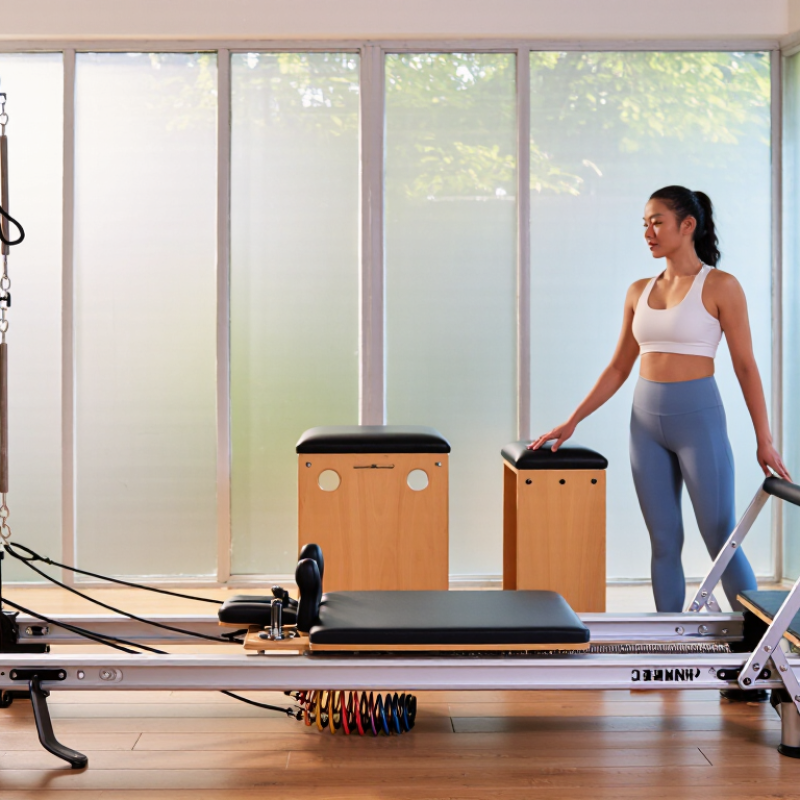
Tip 1: Define your main purpose before comparing reformer Pilates machines. Strength, rehabilitation, flexibility, posture, and athletic conditioning require different features.
Tip 2: Write down your weekly training plan. Two gentle sessions need less equipment than daily, high-resistance workouts.
Tip 3: Consider your experience level. Beginners often benefit from simple resistance settings and clear adjustment points.
Tip 4: Check whether the machine supports your body size and movement range. A short carriage can restrict long lunges and extended legwork.
Tip 5: Match the machine to your available space. Measure the training area, including room for mounting and stretching.
Tip 6: Review the resistance system carefully. Springs can create smooth, progressive tension, but confusing adjustments may interrupt your focus.
Tip 7: Examine the footbar, shoulder rests, and straps. These contact points should feel stable during slow, controlled movements.
Tip 8: Think about maintenance. Cables, wheels, and springs need regular inspection, even in a home studio. Small noises should not be ignored.
Tip 9: Test the machine if possible. A smooth carriage matters more than an attractive frame.
Tip 10: Set a realistic budget around your training goals, not excitement.
My first choice was too ambitious, and I underestimated storage needs. That mistake changed my buying criteria.
Professional instruction can also improve safety, especially after injury or during rehabilitation.
A qualified instructor may identify requirements that product descriptions miss.
Avoid choosing advanced features without a clear use for them. The best reformer is the one that supports consistent practice, fits your environment, and matches your actual Pilates objectives.
10 Tips for Buying a Reformer Pilates Machine?
Measure Your Space and Plan the Reformer’s Setup
A reformer needs more than its listed length. Measure the frame, carriage travel, footbar movement, and user clearance. Leave at least 60 centimeters beside the machine for safe access and cleaning. Behind the head end, allow enough room to adjust springs without hitting a wall. A narrow room can work, but only with disciplined placement.
The Global Wellness Institute reported that the physical activity economy reached about 1.1 trillion US dollars in 2022. Its 2024 monitor projects continued growth through 2027. More home users may want Pilates equipment, yet many underestimate setup demands. My first room plan was wrong. I measured the machine, not the person using it. Mark the full operating area on the floor with tape before purchasing.
Check ceiling height if you plan overhead attachments. Measure doorways, stair turns, and lift interiors before delivery. A machine can fit the room but fail to reach it. Flooring also matters. The American College of Sports Medicine emphasizes functional, safe exercise environments, including stable surfaces and adequate movement space. Choose level flooring that resists sliding and protects against impact.
Keep a clear route around the reformer. Store boxes, weights, and accessories away from the carriage path. Test the setup with a slow lunge and a full leg extension. That practical check can reveal problems that a floor plan misses. Then reconsider your measurements.
10 Tips for Buying a Reformer Pilates Machine?
A reformer should match your training space, body size, and teaching goals. Studio reformers use wider frames, longer carriages, and heavier construction. Home models often shorten the carriage or fold vertically. Tower reformers add springs, bars, and vertical movement. They need extra wall clearance. Compact versions save space, but shorter travel may limit taller users.
Resistance systems deserve closer attention. Traditional springs provide predictable tension and clearer progression. Cords feel lighter and may wear sooner, although they suit portable designs. Count the spring levels, then inspect attachment points, rope adjustment, and carriage smoothness. A stable footbar matters more than decorative padding. Test the loudest movement. Neighbors notice.
The Global Wellness Institute’s 2024 Wellness Economy Monitor valued the physical activity economy at about $1.06 trillion in 2023. This growth creates more equipment choices, but market growth does not guarantee quality. Compare frame width, carriage length, total footprint, and user weight limits. Ask whether replacement springs and wheels remain available. A low-cost machine can become expensive after one failed part. My own preference is for heavier frames, but that choice may be wrong in a small apartment. The best specification is not always the most impressive one.
| No. | Buying Tip | Reformer Type or Feature | Typical Specifications or Options | Why It Matters | What to Check Before Buying |
|---|---|---|---|---|---|
| 1 | Choose the right reformer type | Mat-style, studio, tower, or folding reformer | Studio models are usually more robust; folding models prioritize storage; tower models add vertical resistance and suspension exercises. | The machine should match your available space, training goals, and expected use frequency. | Measure the exercise area, storage area, ceiling height, and access route before ordering. |
| 2 | Compare the resistance system | Spring resistance | Common configurations use several color-coded springs with different tensions, often ranging from light to heavy. | Springs provide progressive resistance and are suitable for controlled Pilates movements. | Confirm the number of springs, tension levels, replacement availability, and whether the bar supports one or multiple springs. |
| 3 | Evaluate the carriage movement | Carriage, wheels, and rails | A carriage should move smoothly along aligned rails with minimal side-to-side play. Wheel systems may use polymer or other low-friction materials. | Smooth, predictable travel improves control, comfort, and exercise consistency. | Check wheel adjustability, rail construction, noise level, maintenance requirements, and user weight capacity. |
| 4 | Prioritize adjustability | Footbar, rope, and pulley adjustments | Useful features include multiple footbar positions, adjustable rope length, movable pulleys, and adjustable shoulder rests. | Adjustability helps accommodate different heights, limb lengths, mobility levels, and exercise variations. | Look for secure locking mechanisms that can be changed quickly without tools. |
| 5 | Check frame stability | Wood, steel, or aluminum frame | Steel and aluminum frames are commonly selected for rigidity and durability; wood frames may offer a traditional appearance and solid construction. | A rigid frame reduces unwanted movement and supports stable performance during dynamic exercises. | Inspect frame joints, welds or fasteners, leveling feet, floor protection, and stated maximum user load. |
| 6 | Select appropriate padding | Carriage, headrest, and shoulder blocks | Look for supportive, resilient cushioning with a durable, easy-clean upholstery surface. Adjustable headrests are useful for spinal alignment. | Comfort and alignment affect exercise quality, especially during longer sessions. | Check upholstery seams, foam recovery, headrest positions, shoulder-block spacing, and cleaning instructions. |
| 7 | Consider tower functionality | Reformer with tower or half-trapeze system | A tower may include springs, bars, straps, and attachment points for additional upper-body, mobility, and suspension exercises. | It expands exercise variety but requires more vertical clearance and careful setup. | Verify tower height, attachment security, included accessories, ceiling clearance, and installation requirements. |
| 8 | Plan for room and storage | Full-length or compact folding design | Many home reformers are approximately 2–2.5 m long when assembled, while folding designs reduce storage length when closed. | A machine that cannot be safely unfolded or stored will be difficult to use consistently. | Allow additional clearance around the frame for arms, straps, mounting, and safe entry and exit. |
| 9 | Review safety and maintenance | Locking systems, straps, springs, and service parts | Important safety elements include secure footbar locks, intact ropes or straps, covered spring ends, stable feet, and clearly defined inspection intervals. | Regular inspection helps identify wear before it affects safe operation. | Ask about replacement springs, ropes, wheels, upholstery, assembly support, and warranty coverage. |
| 10 | Match the machine to your experience level | Beginner-friendly or advanced configuration | Beginners often benefit from clear adjustment markings, stable components, moderate spring choices, and instructional support. Advanced users may prefer more attachment points and customization. | The right level of complexity improves usability and reduces setup errors. | Confirm whether the instructions explain spring settings, body positioning, safety precautions, and progressive exercise options. |
Note: Dimensions, weight capacities, spring tensions, materials, and included accessories vary by model. Always verify the manufacturer’s current specifications and safety guidance before purchase.
A reformer Pilates machine should feel stable before it feels impressive. Inspect the frame, welds, rails, and footbar for movement or rough finishing. Small details matter. A solid frame should remain steady during slow lunges and stronger footwork. Check the stated user-weight limit, but do not treat it as the only safety measure. Springs, ropes, and straps need secure connections and smooth operation. Look for exposed pinch points around the carriage, wheels, and adjustable bar.
Comfort affects consistency. Test the carriage with your body lying flat, not only with your hands. The padding should support your spine without feeling overly soft. A headrest with several positions can reduce neck strain for different body types. Shoulder rests should hold you firmly without pressing painfully. Noise also deserves attention. A loud carriage may indicate poor alignment, loose parts, or weak maintenance.
Adjustability should match real users in your home or studio. Check whether the footbar, ropes, springs, and headrest can change quickly and lock securely. Taller users often need more carriage length and rope range. Shorter users may need closer settings. Do not rush. I once focused too much on appearance and overlooked awkward spring changes. That mistake made regular sessions less convenient. Read the care instructions and inspect replacement-part access before purchasing. A careful trial, ideally with several body positions, reveals more than a polished product description.
10 Tips for Buying a Reformer Pilates Machine?
A reformer’s advertised price rarely shows the complete cost. Request an itemized quote before making a decision. Check whether springs, straps, carriage wheels, and jump boards are included. Ask about taxes, installation, and replacement parts. A low price can become expensive after delivery fees. In my own comparison, a cheaper frame required extra assembly time and stronger floor protection. I also underestimated the value of adjustable footbar positions.
Read the warranty carefully, not just its length. Confirm which parts are covered, who pays return shipping, and whether home use differs from studio use. Ask how quickly damaged components are replaced. A five-year frame warranty may offer little protection if springs and wheels receive limited coverage. I once treated a long warranty as proof of quality. That assumption was too simple.
Delivery needs practical questions. Will the machine arrive in one box or several heavy cartons? Is doorstep delivery included, and can the carrier bring it upstairs? Measure doorways, lifts, and storage space before ordering. Keep photos of the packaging and inspect every part immediately. Support should include clear assembly instructions, reachable service staff, and useful maintenance guidance. Test their response before purchase with specific questions. Slow replies are revealing. Some details remain unclear, especially regional service times, so record every promise in writing.
Use the price bands below as practical planning ranges for home reformer purchases. Before ordering, compare the warranty length, delivery charges, return window, replacement-part availability, and quality of user support.
Entry-level reformers commonly cost about $500–$1,000, mid-range models about $1,000–$2,500, and premium home models about $2,500–$5,000 or more. A lower purchase price may still become expensive if delivery, assembly, maintenance, or replacement parts are excluded.


