How to Choose the Right Triangular Screen?
Choosing the right Triangular Screen begins with the material, not the product name. Particle shape, moisture, feed rate, and target cut size all affect performance. A wet, sticky feed can blind an opening that works well with dry, free-flowing material. Small details matter: a few millimeters of aperture change can alter both throughput and separation quality.
The stakes are rising. The United Nations Environment Programme’s Global Resources Outlook 2024 projects that global natural-resource extraction could increase by 60% by 2060, compared with 2020 levels. That broad trend does not predict demand for any particular screen, but it underlines the need to use processing equipment efficiently. In Mineral Processing Technology, mineral-processing experts Barry A. Wills and James Finch describe screening as “the separation of particles according to their size.” It is a basic definition, yet it points to the key selection question: what size separation must the screen achieve under real operating conditions?
Start by comparing aperture, wire profile, open area, material, and tensioning requirements against your feed and machine specifications. Ask suppliers for test data using material similar to yours, and check how they measure capacity and blinding. A catalogue rating is not a guarantee. That sounds obvious. It is easy to overlook when a screen looks like a close match. The right Triangular Screen should balance separation accuracy, usable throughput, wear life, and maintenance needs—not merely fit the frame. Expect trade-offs, and revisit the choice when feed conditions change.
Understanding What a Triangular Screen Is and How It Works
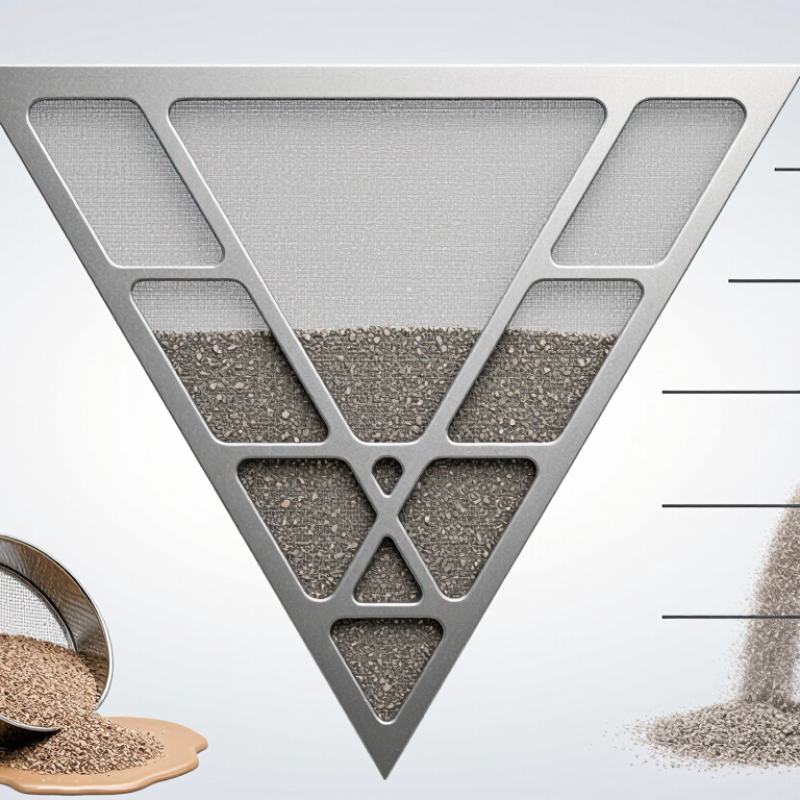
A triangular screen commonly uses profile wires with a triangular cross-section, held apart by support rods. In many designs, the narrow edge faces the incoming material, creating a slot that widens behind the opening. This shape can reduce particle wedging while allowing liquid or smaller material to pass through. The term is not perfectly consistent; different suppliers may use it for different constructions. Check a drawing, not just the product name.
As material moves across the screen, particles smaller than the slot can pass through, while larger pieces remain on the surface. The opening size strongly affects separation, but it is not the only factor. Flow rate, particle shape, moisture, and the material’s tendency to clog can all change performance. A screen that works well with dry, rounded grains may behave differently with damp, irregular fragments. Real materials are messy.
Start by defining the material being screened and the required separation size. Ask for the slot width, wire profile, support spacing, open area, and construction material. These details help compare screens accurately and assess wear or corrosion risks. Installation also matters: flow direction and cleaning methods can affect how easily particles build up. When possible, test a sample with the actual feed material before selecting a full-sized screen.
Identifying the Material and Screening Task
Begin by identifying what the material is like when it reaches the screen. Note its particle-size range, moisture, temperature, and abrasiveness. Dry, free-flowing granules behave differently from damp fines that cling to wires. Moisture changes everything. Record whether the feed arrives steadily or in surges, too; a short inspection may miss the worst conditions.
Then define the screening task. Are you removing oversized pieces, separating a target size, or draining liquid from solids? A triangular opening may suit one separation better than another, depending on its dimensions, orientation, and the material’s tendency to bridge or pass through. Match the opening to the required cut size, but also check the expected throughput and acceptable carryover. For abrasive feed, consider wear life; for sticky feed, look closely at blinding during operation. Run a sample. A small trial with real material can reveal problems that a specification sheet cannot. Keep notes on feed rate, moisture, and the size of misplaced particles. An initial choice may still need adjustment, especially when material quality varies between loads.
How to Choose the Right Triangular Screen? — Identifying the Material and Screening Task
Mineral hardness offers a useful first clue to potential screen abrasion: quartz is harder than calcite or gypsum and may cause greater wear. The Mohs scale is ordinal, not a direct measure of wear rate. Choose the screen opening for the required particle-size cut, and also consider moisture, particle shape, and throughput.
Matching Aperture Size, Wire Profile, and Screen Dimensions
How to Choose the Right Triangular Screen?
Match the aperture to the material you need to separate, not just the target particle size. Check whether the stated opening refers to the clear slot width. Small changes matter. A slot that is too narrow can reduce throughput, while an oversized opening may let unwanted particles pass. Compare the opening with a representative sample, including damp or irregular pieces. Triangular wire profile also matters: its shape affects particle contact and how near-size material moves through the screen. Ask for a drawing or sample when the profile is unclear.
Screen dimensions must suit the machine’s support points and clamping system, not merely fit inside the frame. Measure the usable screening area, then check panel length, width, thickness, and tension requirements. A panel that fits loosely can vibrate unevenly; one installed under excessive tension may wear prematurely. Feed conditions matter, too. A deep, fast-moving bed can cover the openings before particles have enough time to pass. It is easy to overlook this. Record operating conditions and inspect the screen after a trial run. If the cut is inconsistent, check for blocked slots, uneven wear, and installation gaps before changing the aperture. The first choice may not be perfect. That is useful information.
Checking Equipment Compatibility and Operating Conditions
How to Choose the Right Triangular Screen?
Checking Equipment Compatibility and Operating Conditions
Before selecting a triangular screen, compare its dimensions with the existing screen deck. Check the panel length, width, thickness, support spacing, and fastening method. A small mismatch can leave gaps or create uneven tension. Review the equipment manual or ask a qualified supplier to confirm the mounting details. Measure the deck directly when records are incomplete.
Then match the screen opening and wire specification to the material and operating conditions. Consider the feed’s particle-size range, moisture, abrasiveness, temperature, and expected throughput. Damp material may clog small openings, while abrasive particles can wear thin wires faster. Check the screen’s permitted vibration range, too. Excessive movement can loosen fasteners or shorten service life. Small details matter.
A quick compatibility check should include nearby parts, such as spray bars, guards, and discharge chutes. Confirm there is enough clearance for installation and routine inspection. If the process changes seasonally, compare performance under both dry and wet conditions. A neat specification sheet cannot predict every operating issue. That part deserves a second look. Record the chosen dimensions and operating limits, then inspect the screen after startup for movement, blinding, or uneven wear.
Evaluating Durability, Maintenance, and Supplier Quality
A triangular screen must withstand vibration, abrasive material, and repeated cleaning. Check the frame welds, mesh tension, and coating for visible weaknesses. Thin corners can crack first, especially when feed loads vary. Ask how the screen performs with your material, not just under ideal test conditions. A useful supplier should provide material specifications, inspection records, and clear tolerances. It is tempting to focus only on price; that shortcut can miss costly downtime.
Tips: Compare spare-part availability, cleaning instructions, and expected service life. Request a sample or a documented trial. Check whether replacement panels fit your existing equipment.
Maintenance affects durability as much as construction. Fine particles can lodge between wires, while harsh cleaning tools may stretch or damage the mesh. Set a routine inspection schedule, and record wear in the same areas each time. Supplier quality also shows in the details: prompt technical answers, consistent documentation, and realistic performance claims. A perfect-looking sample is not enough. Ask how production batches are checked, and what happens when a panel arrives out of tolerance. One small concern is easy to overlook, but it deserves a direct question.