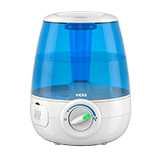
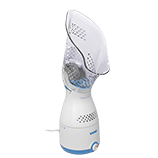
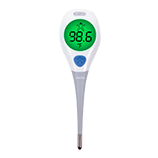
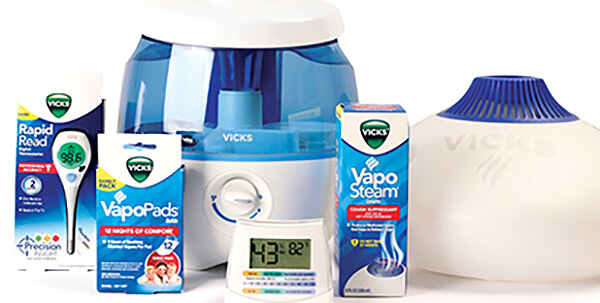

Vicks products are available for purchase online and in-store at most major retailers.
VICKS SUPPORT
View product-specific FAQs & videos
Finding reliable China cool humidifier suppliers requires more than comparing product photos and low quotations. A professional sourcing process examines factory capability, product safety, quality controls, and communication reliability. The right supplier should explain mist output, tank capacity, operating noise, power requirements, and cleaning procedures clearly. Vague answers deserve attention.
Begin with manufacturers that provide complete technical files and current test reports. Depending on your target market, these may include relevant CE, RoHS, EMC, or other required compliance documents. Do not accept certificates without checking the issuing organization and product model. A factory visit, video audit, or independent inspection can reveal details that catalogs hide, such as dusty assembly areas, weak packaging, or inconsistent labeling.
Request samples before discussing large orders. Test them for leakage, mist consistency, noise, automatic shutoff, and overnight performance. Ask for the bill of materials, warranty terms, replacement-part support, minimum order quantity, and realistic production lead time. Experienced suppliers usually identify risks instead of promising everything immediately. That matters.
Price is only one part of the decision. A cheaper unit may create higher return rates, safety concerns, or expensive after-sales work. Compare several suppliers using the same specification sheet. Keep written records of revisions, approved samples, inspections, and packaging artwork. No sourcing checklist is perfect. Even careful buyers can overlook regional labeling rules or changing component quality. However, disciplined verification makes those mistakes less likely and helps build a stable, accountable supplier relationship.
How to Find China Top Cool Humidifier Suppliers?
EPA’s Care for Your Air guide recommends maintaining indoor relative humidity between 30% and 50%. This range can reduce dryness without creating overly damp conditions. Buyers should require suppliers to support this target with accurate humidity controls, not vague “mist output” claims. A built-in hygrometer is useful, but calibration matters. Ask for test procedures, sensor accuracy, and readings taken at different room temperatures.
ASHRAE Handbook—Fundamentals commonly uses 30% to 60% RH as a comfort-related indoor range. However, the upper limit may encourage condensation on cold windows and walls. Choose suppliers that offer adjustable output, automatic shutoff, and low-water alerts. Request independent laboratory reports for noise, electrical safety, leakage, and continuous operation. The Association of Home Appliance Manufacturers also emphasizes standardized performance information for portable humidifiers, making comparable test data valuable during sourcing.
Look closely at the details.
A supplier’s room-size rating may depend on test conditions that differ from your market. Ask whether performance was measured with doors closed, heating active, or ventilation running. Confirm replacement filter availability, cleaning access, packaging protection, and spare-part support. In my experience, a cheaper unit can become expensive when sensors drift or mineral residue builds quickly. I would also test a sample for seven days before placing a large order. Some specifications may look impressive but remain difficult to verify.
Define buying criteria around the EPA-recommended indoor relative humidity range of 30–50%.
When evaluating cool-mist humidifier suppliers, prioritize models that provide adjustable humidity control, reliable humidistats, automatic shutoff, and stable operation across the 30–50% RH target range. Indoor humidity below 30% may increase dryness, while levels above 50% can encourage condensation and mold growth.
How to Find China Top Cool Humidifier Suppliers?
When sourcing cool-mist humidifiers from China, compare AHAM HU-1 ratings before comparing prices. This standard evaluates humidifier performance under controlled test conditions. Check the rated moisture output, usually listed in gallons per day or liters per hour. Coverage claims should match the tested output, not only the supplier’s marketing sheet. A unit producing fine visible mist may still add less moisture than expected.
Ask each supplier for the AHAM HU-1 test basis, rated room coverage, water tank capacity, and operating noise. Compare identical conditions. A humidifier rated for 500 square feet may perform differently in a drafty room with high ceilings. Review samples personally. Measure refill frequency, mist consistency, and humidity changes with a separate hygrometer. Certification documents can help, but vague documents deserve caution.
Tips: Request test reports for the exact model, not a similar series. Check whether output changes at each fan setting. Ask how coverage was calculated. Inspect the tank seal and cleaning access. These details affect daily use. Supplier responses also reveal technical experience. One weak point remains: real homes rarely match laboratory conditions. Allow a practical margin instead of choosing the smallest rated model. Keep specifications, test records, and sample results in one comparison sheet.
| Evaluation Dimension | AHAM HU-1 / Technical Reference | Entry Output Tier | Medium Output Tier | High Output Tier | What to Verify with a Supplier |
|---|---|---|---|---|---|
| Cool-mist moisture output | Portable humidifier output should be tested under a defined method and reported consistently. AHAM HU-1 is used as a reference for household humidifier performance testing. | Up to 0.50 gal/day (up to 1.89 L/day) |
More than 0.50 to 1.00 gal/day (more than 1.89 to 3.79 L/day) |
More than 1.00 gal/day (more than 3.79 L/day) |
Obtain the tested output in gallons per day and liters per day, together with the test conditions and report date. |
| Indicative room-coverage screening | Coverage depends on room volume, air exchange, temperature, humidity target, and building envelope. It should not be inferred from tank size alone. | Approximately 100–250 sq. ft. (9–23 m²) |
Approximately 250–500 sq. ft. (23–46 m²) |
Approximately 500–900 sq. ft. (46–84 m²) |
Check whether the advertised coverage is supported by a recognized test or is only a manufacturer estimate. |
| Mist technology | Cool mist may be produced by ultrasonic or evaporative technology. AHAM HU-1 output comparison does not make these technologies interchangeable in maintenance or noise performance. | Usually ultrasonic for compact units | Ultrasonic or evaporative configurations | Often uses a larger ultrasonic transducer or evaporative system | Request the mist-generation method, replacement-part list, and performance data at each fan or mist setting. |
| Water-tank capacity | Tank capacity is different from daily moisture output. A larger tank does not necessarily indicate higher humidification performance. | Approximately 1.0–2.0 L | Approximately 2.0–4.0 L | Approximately 4.0–8.0 L | Compare usable tank volume, stated runtime at maximum output, refill design, and low-water protection. |
| Runtime at maximum output | Runtime is calculated from usable water volume and actual output. It should be measured at the highest continuous setting rather than the lowest setting. | Typically 8–24 hours | Typically 8–20 hours | Typically 6–18 hours | Ask for runtime test results at maximum output and confirm the water volume remaining when automatic shutoff activates. |
| Humidity control | A built-in humidistat can regulate operation, but sensor placement and calibration affect actual room humidity. | Basic or optional humidistat | Digital humidity setting commonly available | Digital control with continuous or automatic mode | Verify humidity-setting range, sensor accuracy, automatic shutoff logic, and calibration procedure. |
| Noise performance | Noise values are meaningful only when the measurement distance, operating mode, and test environment are stated. | Commonly below 35 dB(A) on low mode | Commonly below 40 dB(A) on low mode | May exceed 40 dB(A) at maximum output | Request sound-pressure measurements at a stated distance, preferably at both minimum and maximum output. |
| Mineral and white-dust control | Ultrasonic units can disperse minerals from untreated water. Output claims should be evaluated together with water-quality guidance and filtration options. | Water-quality warning and optional cartridge | Replaceable demineralization cartridge commonly available | May include filtration, water-treatment guidance, or evaporative media | Request mineral-dispersion test data, recommended water hardness, cartridge life, and cleaning instructions. |
| Supplier documentation | A credible performance comparison requires traceable test information rather than a room-size statement alone. | Basic specification sheet | Specification sheet plus test report | Test report, compliance documents, drawings, and quality records | Request AHAM HU-1 reference information, laboratory identification, model number, revision date, and applicable electrical-safety reports. |
| Recommended supplier score | Use performance evidence as the primary filter, then assess safety, consistency, serviceability, and production control. | Suitable for small bedrooms and personal workspaces | Suitable for bedrooms, offices, and medium living areas | Suitable for larger open rooms when independently supported | Prioritize suppliers that provide repeatable HU-1-related output data, stable production samples, clear warranty terms, and replacement-part support. |
Note: Gallon-to-liter conversions use 1 U.S. gallon = 3.785 liters. The coverage bands are practical screening ranges, not certification claims; final room coverage should be verified from the supplier’s documented test method and actual site conditions.
When evaluating cool humidifier suppliers in China, compliance should guide your search. Ask for evidence related to GB 4706.1 and GB 4706.48. These standards address general household appliance safety and humidifier-specific requirements. Request the complete test report, not only a certificate image. Check the factory name, model number, rated voltage, testing laboratory, and report date. Small mismatches can reveal large problems.
A reliable supplier should explain how its humidifier meets electrical insulation, leakage current, moisture protection, and abnormal operation requirements. Ask for photos of internal wiring, water-resistant structures, plugs, and heating-free mist components. The sample should match the tested model exactly. Different tank sizes or control boards may require additional evaluation. Confirm the applicable standard editions for your destination market and shipment date. Requirements can change.
Do not rely on polished documents alone. During sample inspections, compare labels, manuals, ratings, and safety warnings with the test report. Test the unit after several hours of operation. Check for water leakage, unstable mist output, unusual noise, and overheating near the power connection. A supplier may answer quickly yet provide weak technical evidence. That is a warning. I would also request production records and corrective-action examples, although these documents are sometimes incomplete. Honest limitations are easier to assess than confident but vague promises.
A reliable supplier should show its production process, not only a polished catalog. Visit the factory or request a live video audit. Check injection molding, ultrasonic assembly, water-tank testing, and final inspection areas. Look for organized workstations and clear material labels. Production capacity must match your forecast. Ask for monthly output, shift numbers, equipment lists, and current utilization. A factory running near full capacity may struggle with urgent replenishment.
MOQ deserves careful negotiation. Ask whether the minimum applies to one model, one color, or one packaging design. Compare the MOQ with your sales plan and storage limits. A lower MOQ can hide higher unit costs. Request a written quotation with tooling, sample, packaging, and testing fees clearly separated.
ISO 9001 certification is useful, but it is not automatic proof of product quality. Verify the certificate’s scope, validity, and issuing body. Review incoming inspection records, corrective action reports, calibration logs, and batch traceability. For cool-mist humidifiers, observe leakage tests, noise checks, mist-output measurements, and electrical safety inspections. Request recent sample reports, then compare them with your own testing. Do not rely on one successful sample. Factories can change components without warning. I once overlooked packaging compression during an early audit; several cartons later arrived damaged. That mistake showed why supplier evaluation must include transport conditions, not just factory performance.
When selecting China’s top cool humidifier suppliers, test samples before trusting catalog figures. A 2024 Grand View Research report projects continued growth in the global humidifier market, increasing supplier competition and specification claims. Market growth does not prove factory reliability.
Request 30 to 50 samples from one production batch. Run each unit for 24 hours in a controlled room. Record water output in grams per hour, remaining tank volume, and shutdown behavior. Compare results with the supplier’s rated capacity.
AHAM HU-1 provides a recognized framework for portable humidifier performance testing. Measure sound one meter away, using the same floor and water level. ISO 3744 principles can support consistent acoustic measurements. Some samples sound quiet initially, then develop pump noise overnight.
Inspect the tank, seals, base, and power connection after continuous operation. Place white absorbent paper beneath every unit. It exposes small leaks quickly. Calculate the defect rate by category, not only as a total percentage.
ISO 2859-1 offers sampling guidance, but a small sample can hide serious variation. Our first spreadsheet looked convincing. It was wrong because we mixed samples from different batches.
Keep batch numbers, test videos, ambient humidity, and failure photographs. A supplier that shares raw records appears more reliable than one offering polished certificates alone.