






How to Choose the Right Steel Mill Equipment

Choosing Steel Mill Equipment is a production decision, not simply a purchase based on rated capacity. The wrong furnace, rolling line, or material-handling system can create bottlenecks that appear only after commissioning. They are expensive to fix. World Steel Association’s World Steel in Figures 2024 reports global crude steel production of about 1.89 billion tonnes in 2023. That scale reflects a demanding industry, but it does not mean every mill needs the same machinery.

Start with the products you plan to make, their dimensions, required tolerances, and expected output. Then match equipment to the production route, available utilities, plant layout, and workforce capabilities. The International Energy Agency identifies iron and steel production as a major source of energy use and CO₂ emissions. Its analysis makes energy performance a practical selection criterion, alongside throughput and purchase price. Compare consumption per tonne, expected yield, maintenance access, spare-parts availability, and integration with existing controls. A lower quotation can hide longer changeovers or difficult repairs.

Request operating references for comparable products and production conditions. Ask suppliers for documented performance data, commissioning support, and clear assumptions behind capacity claims. Check whether service technicians and critical components are realistically available at your location. Small details matter. A technically impressive specification can still fail your needs if it depends on ideal feedstock or uninterrupted operation. No report can replace a site-specific engineering review. Use industry benchmarks to frame questions, then verify the answers against your mill’s actual constraints before committing.
How to Choose the Right Steel Mill Equipment

Identify Production Goals and Steel Types

Choosing steel mill equipment starts with a clear production brief: annual tonnage, product dimensions, grade range, and required tolerances. A mill making coil for construction needs different rolling and finishing capacity than one producing narrow stainless strip. Specify whether output will be slabs, billets, bars, or flat products; each choice affects casting, reheating, and rolling equipment.

World Steel Association’s World Steel in Figures 2024 reports global crude steel production of 1,892.2 million tonnes in 2023. That scale varies enormously. It is context, not a sensible target for an individual plant.

Define the steel types before comparing furnaces. Carbon, alloy, and stainless grades differ in chemistry, temperature control, and contamination risks; those differences shape melting, refining, and inspection needs. A high-mix operation may value flexible changeovers more than peak throughput, while steady production can justify specialized lines.

The International Energy Agency’s Iron and Steel Technology Roadmap (2020) estimates the sector emitted about 2.6 gigatonnes of CO2 in 2019, roughly 7% of global energy-system emissions. This makes energy use worth measuring alongside output.

Ask equipment suppliers to model your actual grade mix, scrap share, yield, and operating hours. I would still treat early forecasts cautiously: product demand often shifts, and a neat spreadsheet cannot capture every bottleneck.

Map the Manufacturing Process and Equipment Needs

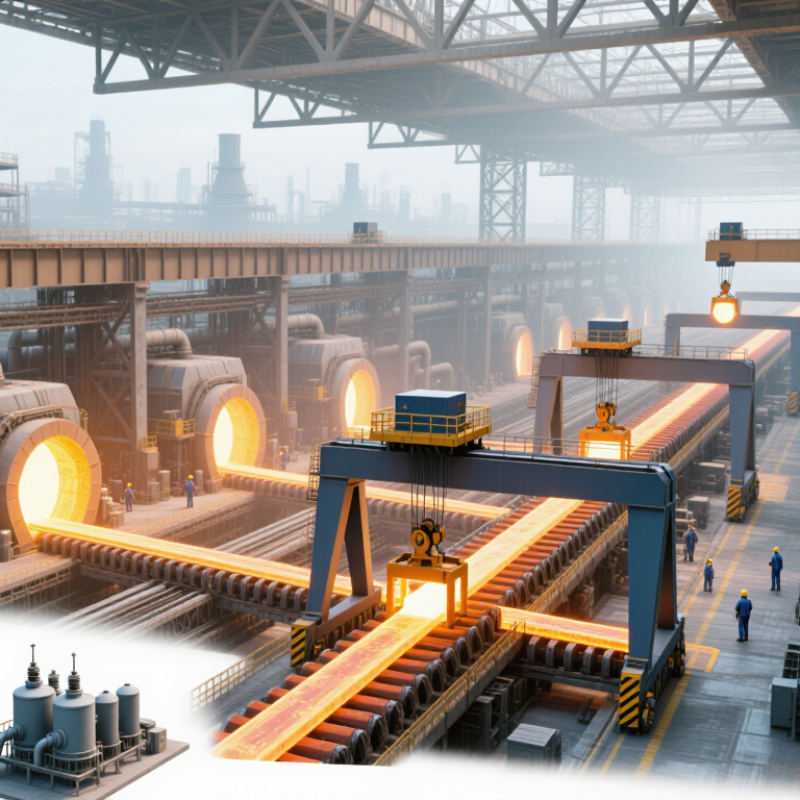
Map the manufacturing process before comparing equipment. A mill making long products from scrap needs a different line from an integrated mill producing flat steel from iron ore. Trace each stage: raw-material receiving, preparation, melting or ironmaking, refining, casting, rolling, and finishing. Then record the required output, steel grades, dimensions, and operating hours. Small details matter. A billet caster and a slab caster do not solve the same production problem.

The route mix helps explain why equipment choices vary. World Steel Association’s World Steel in Figures 2024 reports that 70.4% of global crude steel was made through the basic oxygen furnace route in 2023, while 28.6% used electric arc furnaces. For each route, map the interfaces: material handling, furnace charging, secondary metallurgy, casting, and rolling. Check cycle times and storage buffers; a fast furnace cannot compensate for a slow caster. IEA’s Iron and Steel Technology Roadmap estimates the sector produced about 2.6 gigatonnes of direct CO₂ emissions in 2019. That makes energy use and emissions controls relevant equipment criteria, not afterthoughts.

Walk the proposed flow on a simple layout. Mark crane paths, furnace-to-caster distances, dust collection, water systems, and maintenance access. Compare nameplate capacity with realistic shifts, changeovers, and downtime. I would question any plan based only on peak output; it can overlook the bottleneck hiding between casting and rolling. Some assumptions will be wrong. Revise the map with operators and maintenance staff before specifying machines.

Compare Capacity, Performance, and Technical Specifications

Choosing steel mill equipment means comparing usable output, not just the capacity printed on a datasheet. World Steel Association’s World Steel in Figures 2024 reports 1,892.2 million tonnes of global crude steel production in 2023. That figure describes the industry, not a sensible target for one mill. Estimate your own product mix, planned shifts, changeovers, maintenance hours, and expected yield. A line rated for 100 tonnes per hour may deliver less when grades change or stoppages accumulate. Small gaps matter.

Performance comparisons should include energy use per tonne, material yield, line speed, dimensional tolerances, and maintenance access. The International Energy Agency’s Iron and Steel Technology Roadmap (2020) attributes about 7% of global energy-related CO2 emissions to the steel sector. Efficient drives, heating systems, and process controls can therefore affect both operating costs and emissions. Check how suppliers define their performance figures, and request test conditions that match your feedstock and product. A polished spreadsheet can hide assumptions; I would verify them against production records.

Tips: Compare annual usable output, not peak speed. Ask for energy consumption, tolerances, and expected downtime under stated operating conditions. Check whether spare parts and service support are available. Then review the figures with operators who know the line’s daily constraints.

Assess Plant Compatibility, Safety, and Maintenance Requirements

A steel mill machine must fit the work, the building, and the people who operate it. Check the required steel grades, product dimensions, throughput, and expected changes in production. Then compare those needs with the equipment’s operating range. Measure the actual work area, including access routes, crane clearances, foundations, and space for material handling. A machine can meet the production target on paper and still be difficult to install.

Compatibility also means matching utilities and process conditions. Confirm electrical capacity, cooling-water supply, compressed air, and connections to upstream and downstream equipment. Ask for operating limits and interface drawings, not just a headline capacity figure. Small mismatches matter. A line that runs faster than the reheating or finishing stages may create bottlenecks rather than improve output.

Safety deserves a practical review at the machine, not only in a document. Inspect guarding, emergency stops, operator sightlines, hot-material paths, and access for cleaning or jam removal. Consider how workers will isolate energy before maintenance, following applicable site procedures and safety requirements. Walk through likely tasks with operators and maintenance staff; they may notice awkward reaches or blind spots that a layout misses. It is easy to overlook those details.

Plan maintenance around real shifts and available skills. Review inspection intervals, lubrication points, wear-part life, diagnostic access, and the tools needed for routine service. Ask how quickly common components can be replaced and whether critical spares can be stored on site. Maintenance estimates are never perfect; operating conditions and steel grades can change wear rates. Track downtime after installation and revise the schedule using actual findings.

Evaluate Suppliers, Costs, and Long-Term Support

Choosing steel mill equipment starts with the work it must perform, but supplier claims need checking against your operating conditions. Ask for throughput data based on the steel grade, product dimensions, and shift pattern you actually use. Request drawings, utility requirements, maintenance intervals, and references from installations with similar duty cycles. Visit a running site if possible. Watch how operators reach lubrication points and change rolls; brochures rarely show cramped walkways or awkward guards. Small details matter.

Estimate total cost across the equipment’s service life, including installation, energy, tooling, spare parts, and downtime. Get a written list of included components and exclusions. A low purchase price can shift costs into commissioning or replacement parts. Not always. Assess support in practical terms: response hours, technician availability, spare inventory, training, and escalation procedures. Ask who handles a fault at 2 a.m. and what information they need before dispatch. Check warranty conditions and service records, not just promises. Keep a contingency for commissioning delays; even careful plans miss something. Compare suppliers using the same criteria, and ask maintenance staff what failed, how quickly it was fixed, and whether the issue returned. One reference call is not enough.