How to Choose the Best Vegetable Cutter for Your Business
Choosing a Vegetable Cutter is not just a matter of speed. It shapes portion consistency, staff workload, and the quality of each service. A busy café may need crisp, even tomato slices, while a meal-prep kitchen may depend on uniform carrot cubes. Those details matter. So does the space beside the sink.
Before comparing models, consider what your team cuts each day, how much it processes, and who will clean the machine. Blade changes should feel secure and straightforward. Feed openings must suit the ingredients, not force staff to trim every piece by hand. A compact unit may save counter space, yet struggle during a lunch rush. There is no perfect machine for every kitchen.
An illustrative composite specialist—not a real person or a verifiable source—might put the buying principle this way: “Choose for your busiest shift, then check how easily the cutter cleans.” Treat that as a practical reminder, not an attributed expert quotation. A real published guide should replace it with a verified comment from a named equipment professional.
The sections ahead will compare cutter types, blade options, capacity, safety features, cleaning demands, and total operating costs. They will also show how to match a machine to your menu and workflow. A small test can reveal a lot: cut a firm potato, inspect the pieces, and time the cleanup. Still, one trial cannot answer everything. Your staff’s feedback may challenge your first choice—and it should.
Define Your Business’s Vegetable Preparation Needs
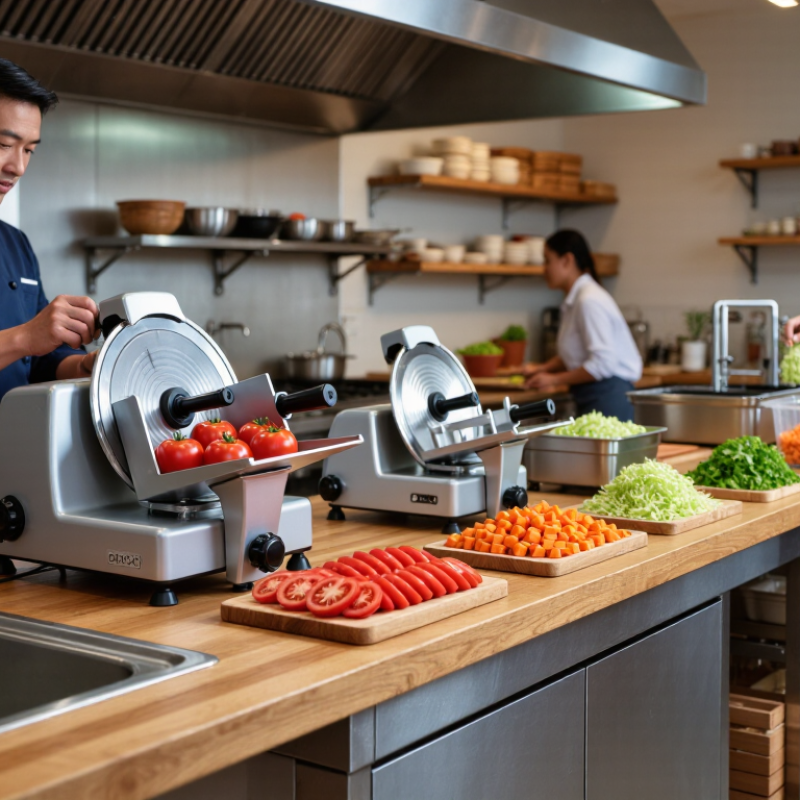
Before choosing a vegetable cutter, define what your kitchen actually prepares. List the vegetables used each day, from firm carrots and potatoes to soft tomatoes or leafy greens. Record approximate quantities during both quiet and busy shifts. A café serving salads may need thin, even slices, while a catering kitchen may need larger batches of diced vegetables. Note who will operate the machine and how much counter space is available. Small details matter.
Tips: Track prep time for several shifts. Measure your largest vegetables and check whether staff need slices, cubes, or strips. Ask cooks which cuts they repeat most often. Their habits may differ from the menu plan.
Match cutter capacity and cutting options to your real workload, not an imagined peak day. A unit that is too small can slow service; an oversized one may take up valuable space and be harder to clean. Check how blades are removed and washed, and whether parts feel manageable for your team. I would not assume one cutter handles every texture equally well. Test representative produce, if possible, and inspect the results. Uneven pieces can affect cooking time and presentation. Revisit your needs after a menu change; prep routines shift, sometimes unexpectedly.
Compare Vegetable Cutter Types and Cutting Functions
A vegetable cutter’s value depends on the cuts your menu actually needs. Manual mandolines and push-style dicers suit small prep batches, such as slicing cucumbers for lunch service or dicing onions for a daily soup. They take little space, but output depends on the operator and blade care. Watch your hands; a hand guard is essential.
For steady, higher-volume prep, a countertop cutter can handle larger batches with less repetitive effort. Compare its available blades: a slicing disc makes even rounds, a dicing grid creates cubes, and a shredding disc produces strands for slaw. Julienne blades are useful for narrow strips, but not every machine includes them. Check the cut size before buying, since “dicing” can mean different dimensions across models.
Fit matters. Measure the counter, check how quickly parts can be removed, and ask whether blades are easy to clean and replace. A machine that handles several functions may save space, yet changeovers can slow service. I would not choose by speed claims alone; try the cutter with firm carrots and softer tomatoes if possible. One may come out neat, the other bruised. That difference can matter on the plate.
Evaluate Capacity, Durability, and Workplace Safety
A vegetable cutter should match the rhythm of your kitchen, not just its busiest hour. Estimate how many kilograms your team prepares during a typical shift, then check the stated output rate against that demand. A high-capacity machine may still slow service if its feed opening is narrow or cleaning takes too long. Small details matter. Watch how staff load carrots, cabbage, and softer produce during a real prep period.
Durability shows in the parts that face daily strain. Inspect the blade assembly, frame, guards, and any removable components. Ask how often blades need sharpening and whether replacements are easy to source. Stainless steel can resist corrosion, but it does not make every part equally sturdy. I have seen teams focus on motor power and overlook loose fittings; that can become an irritating maintenance issue.
Safety needs practical checks, not just reassuring product language. Look for stable feet, secure guards, and controls that are easy to reach without crossing the cutting area. Confirm that the machine stops when its cover is opened, and review the cleaning instructions with the staff who will use it. Gloves are not a substitute for safe handling procedures. Also consider noise and counter space. A cutter that fits neatly into a specification sheet may feel awkward beside a crowded sink, and that judgment is worth revisiting before purchase.
Check Cleaning, Maintenance, and Food Safety Requirements
A vegetable cutter should be easy to clean between different ingredients, not just quick to operate. Ask how the blades, pusher, and feed chute come apart, and whether staff can reach every food-contact surface without awkward tools. A unit that looks simple on a showroom floor may hide narrow seams where vegetable residue collects. Small parts matter. Check the care instructions before buying, including approved cleaning agents, rinsing, and drying requirements. Do not assume every component can go in a dishwasher.
Maintenance affects food safety too. Inspect blades regularly for chips, looseness, or corrosion, and replace damaged parts according to the manufacturer’s guidance. Dull blades can crush produce and make cutting less consistent; they may also encourage workers to apply extra force. Keep a written cleaning schedule that identifies who cleans the cutter and when, especially after switching between raw ingredients. Staff should wash their hands and use clean containers for cut vegetables. Storage matters. Let cleaned components dry fully before reassembly, and keep them protected from splash and dust. A simple checklist helps, though it may not catch every problem; supervisors still need to look closely at seals, joints, and blade mounts during routine inspections.
Balance Cost, Available Space, and Supplier Support
A vegetable cutter should fit the work your kitchen actually does, not just the budget on a purchase form. Estimate daily volume and the vegetables you prepare most often. A unit suited to a few trays of onions may struggle during a lunch rush with carrots and potatoes. Ask for a demonstration using similar produce, and check whether cut sizes stay consistent. Measure twice. Include the machine, its feed opening, and room to load and clean it. In a tight prep area, a large model can block access to sinks or other equipment. That detail is easy to miss.
Compare the purchase price with the ongoing costs: replacement blades, cleaning time, power use, and likely maintenance. A cheaper cutter may cost more if parts are difficult to source. Supplier support matters here. Ask how quickly common parts ship, whether repair guidance is available, and what staff training includes. Get warranty terms and service expectations in writing. Practical answers are more useful than broad promises. If possible, have the supplier help assess your expected workload and available space before ordering. I would not treat a capacity figure as a guarantee; actual results depend on the produce, cut setting, and operator. Keep that uncertainty in the decision.